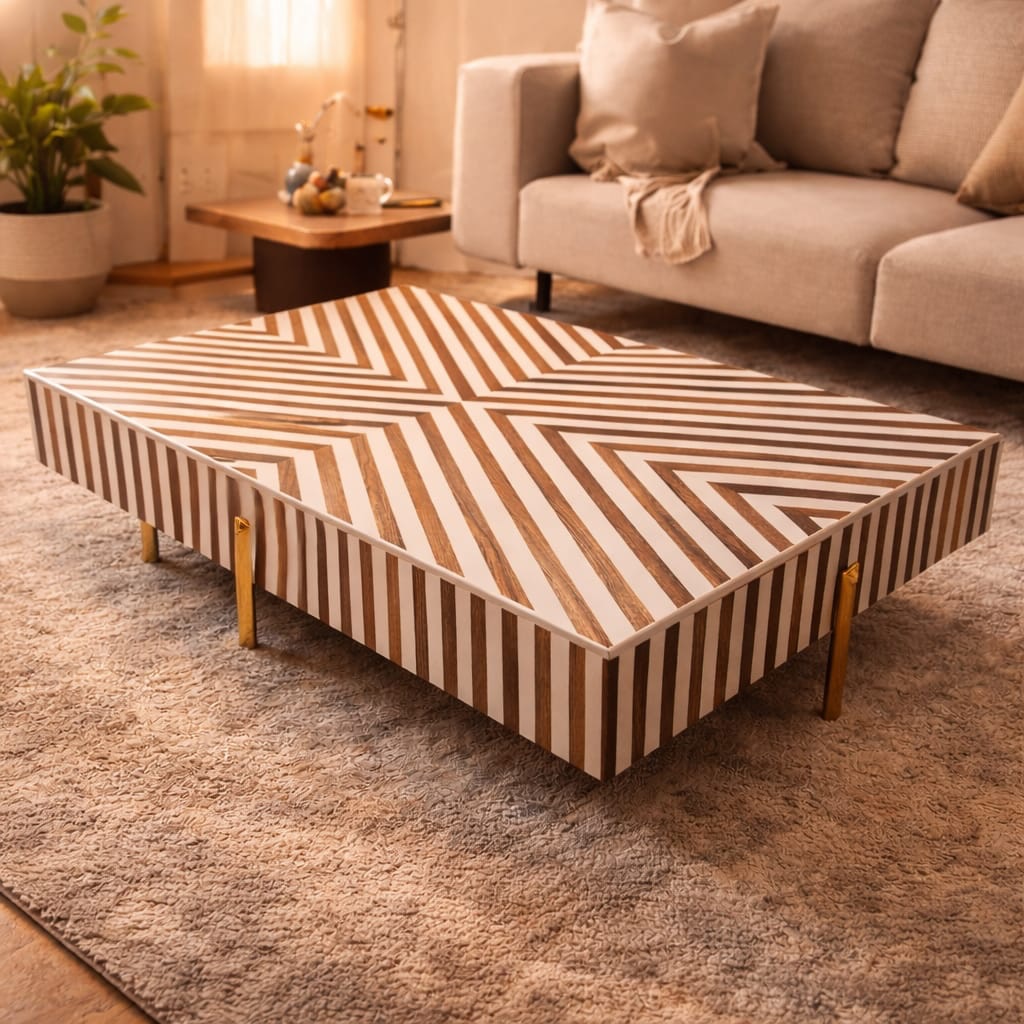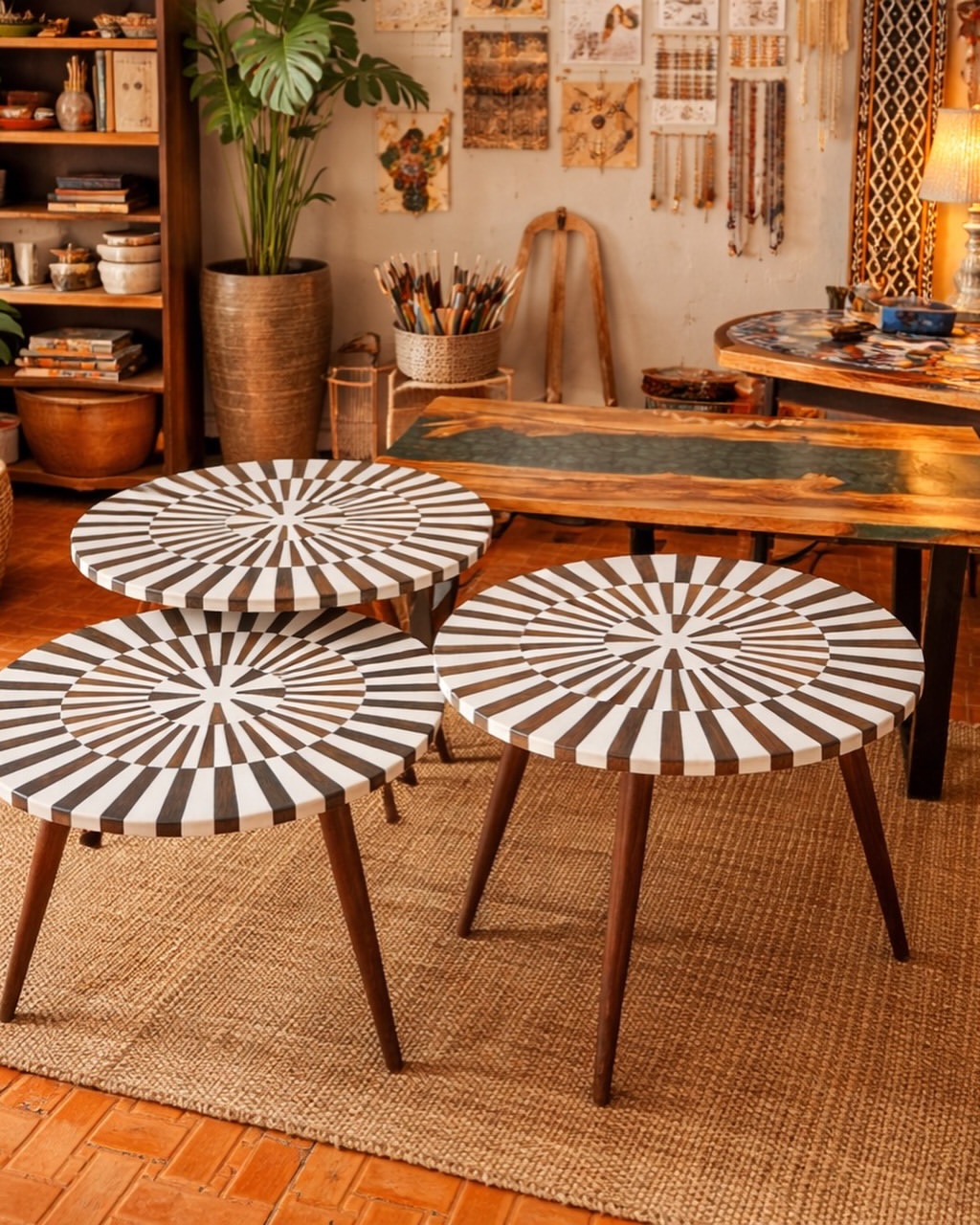
An ivory sofa, pale walls and soft linen curtains make an inviting starting point. Add a striped armchair with a flash of turquoise, and the room begins to feel more individual. Bring in a round table that repeats the same colour, and those separate pieces start to belong together.
Adding colour to a neutral living room can begin with a single piece you love. Its colours, materials and shape can guide the choices that follow, helping you build a space that feels comfortable, considered and personal.
Start with one piece that catches your eye. An accent chair is a useful place to begin because it brings colour into the room at a noticeable scale. Look for a design you enjoy from across the room and up close: the outline of the frame, the feel of the upholstery and the details in its pattern all matter.
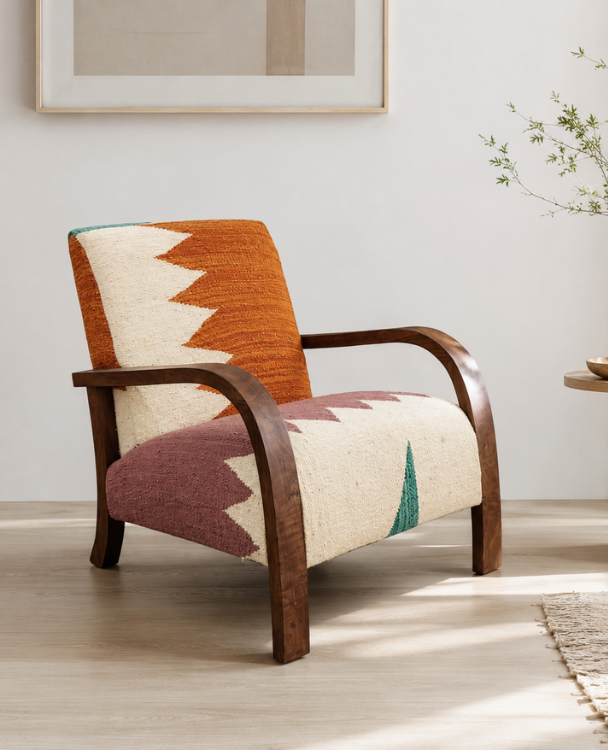
A wooden armchair upholstered in brown and turquoise stripes offers several starting points. The brown connects with earthy neutrals, while turquoise introduces a brighter note. Beside a cream sofa, it can become the piece that gives the seating area its character. Leave a little space around it so the curved arms and patterned fabric remain visible.
Let wood connect the colours. A palette of turquoise, cream and brown gives you plenty to work with. Repeat the warmth of the chair’s wooden frame in a table, picture frame or shelving. Choose wood tones that feel comfortable together; some variation in grain and shade can make the arrangement more interesting.
Before adding accessories, look at the colours already present in the room. Flooring, curtains and large furniture all contribute to the palette. Holding a fabric or paint sample beside them, in daylight and under your evening lighting, can help you decide which shades belong.
Repeat your accent colour in a few thoughtful places. A turquoise detail on a table can echo the stripes of an armchair. A small ceramic bowl or a colour within a print can carry that connection elsewhere in the room. Allow the neutral surfaces between these objects to remain part of the composition.
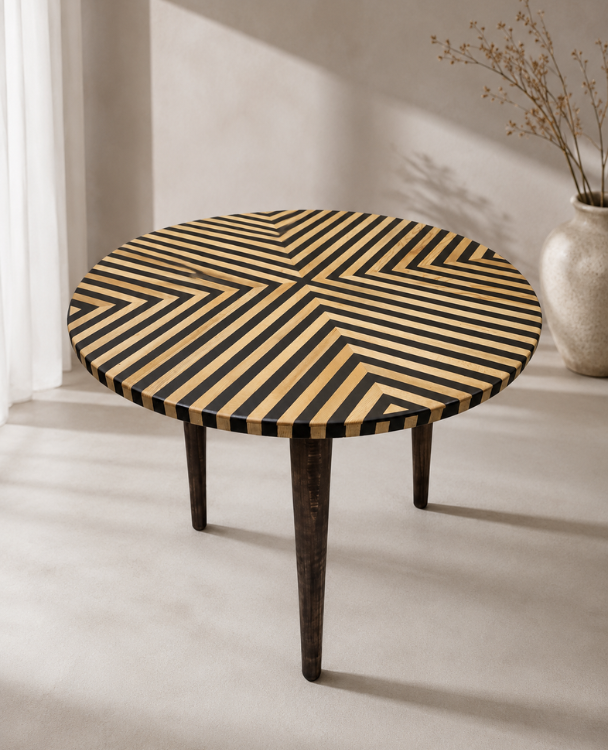
The turquoise-and-wood round table and striped armchair shown here suggest a playful pairing. Their shared colours connect them, while the circular tabletop and curved wooden arms bring different shapes into the arrangement. Keep objects on the tabletop simple so its graphic surface stays visible.
Give patterns room to breathe. When both the chair and table feature stripes, a plain sofa or softly textured curtain can provide a quieter surface nearby. If you introduce another pattern, try changing its scale. A rug with a larger, more open design is one option to compare with the narrower stripes of the upholstery.
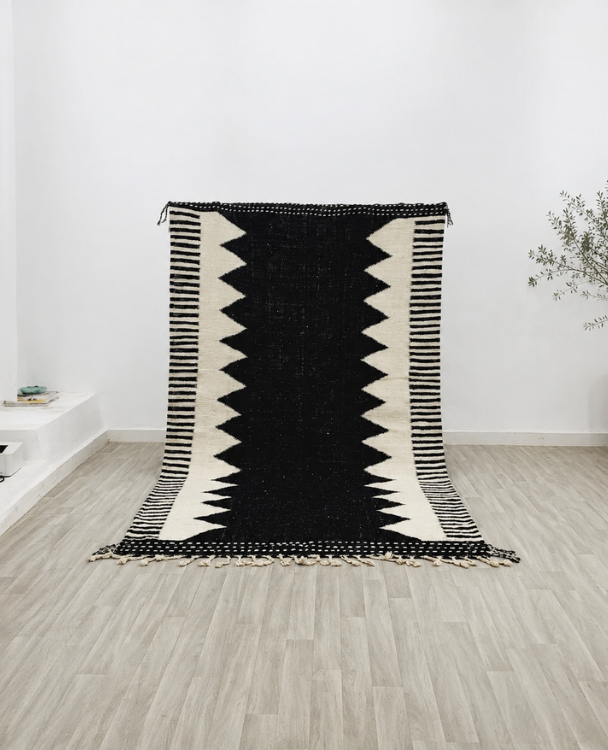
For a calmer look, consider an ivory, sand or warm beige rug with subtle texture. For a more colourful scheme, look for a rug that picks up one of the chair’s shades. Lay out colour samples or product photographs together before deciding, and check the rug’s dimensions against the furniture arrangement.
Use texture to add depth. Woven upholstery, visible wood grain, linen and a textured rug can give a restrained palette variety. A plain cushion may be enough to soften a patterned chair, while a ceramic vase brings another surface into the room. Choose a few details you enjoy and leave enough space to use the furniture comfortably.
Begin with the chair, then consider what the room needs next. It might be a table within reach, a rug that connects the seating or a lamp for reading. Let each addition serve the way you spend time there. A neutral room gives you a flexible foundation; the pieces you choose bring your own taste into view.
Explore Rugs & Chairs and find a piece to inspire your next living room update.
Blog
Get fresh home inspiration and helpful tips from our interior designers